

A friend of mine messaged me last week with a question I hear all the time: “I finally have a bit of extra cash at the end of the month but how much should you invest each month, realistically?” It’s a fair question, and honestly, most people never get a straight answer to it.
Here at Thepennyfy, we get asked this almost every week, from readers in the US wondering about their 401(k) contributions to readers in the UK trying to figure out their ISA allowance. So let’s settle it once and for all with a simple, practical rule you can actually stick to.
Why “How Much” Matters More Than “Which Fund”
Most beginners spend hours researching the “perfect” stock or fund, and almost zero time figuring out how much should you invest each month in the first place. That’s the wrong order of priorities.
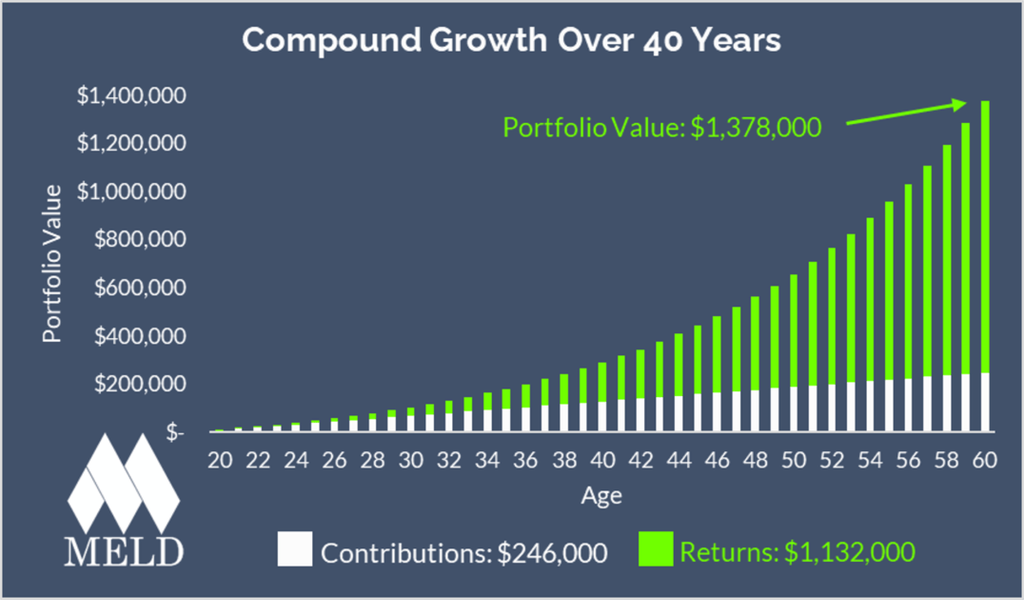
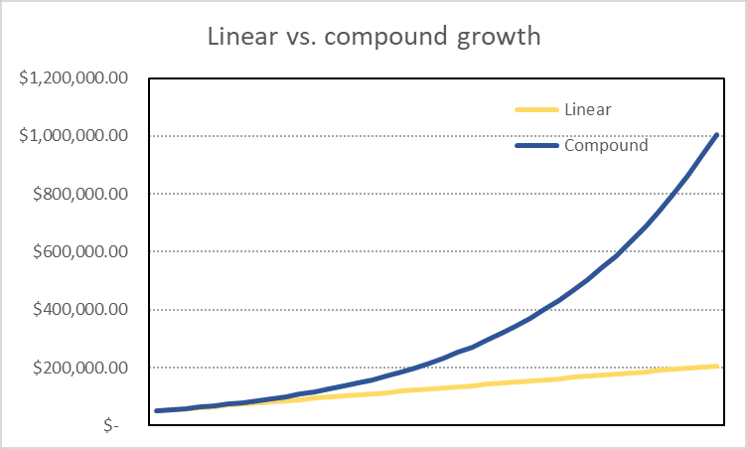
A modest, consistent amount invested every single month left alone to grow will almost always beat a large lump sum followed by months of inconsistency. Consistency is the real secret, not timing the market.
The Simple Rule: 15–20% of Your Income (Eventually)
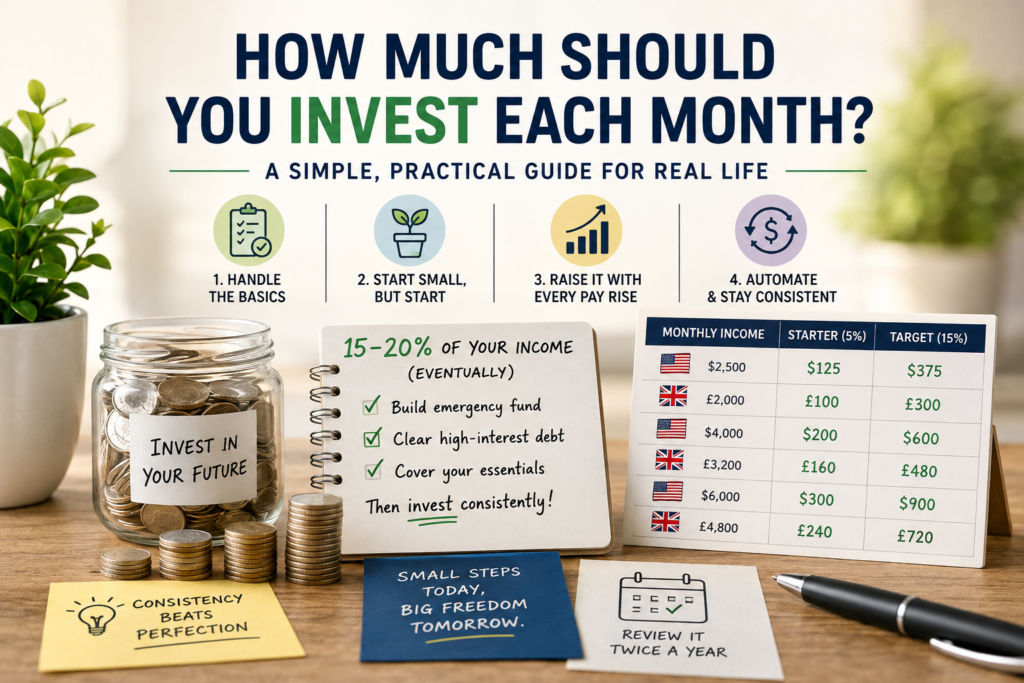
Most financial planners point to a range of 15–20% of your gross income as a long-term target for retirement and investing combined. But that’s a destination, not a starting line. If you’re asking how much should you invest each month for the very first time, don’t panic about hitting that number right away.
Step 1: Handle the Basics First
Before you invest a single dollar or pound:
- Build a small emergency cushion (even $500 / £500 is a solid start)
- Clear off high-interest debt like credit cards
- Make sure rent, bills, and essentials are covered
Step 2: Start Small, But Start
If 15% sounds unrealistic right now, start with 5%. The honest answer to how much should you invest each month for a true beginner is: whatever you can keep up without quitting after two months.
Step 3: Raise It With Every Pay Rise
Got a bonus or a raise? Before your spending grows to match it, bump your investing percentage up by 1–2%. This is one of the easiest, least painful ways to increase how much should you invest each month over time.
Real Numbers: What This Looks Like Month to Month
| Monthly Income | Starter (5%) | Target (15%) |
|---|---|---|
| $2,500 / £2,000 | $125 / £100 | $375 / £300 |
| $4,000 / £3,200 | $200 / £160 | $600 / £480 |
| $6,000 / £4,800 | $300 / £240 | $900 / £720 |
Whether you’re contributing to a 401(k) or Roth IRA in the US, or paying into a Stocks and Shares ISA in the UK, this percentage-based approach scales naturally, no matter which side of the Atlantic you’re on. Thepennyfy readers often ask which account matters more and the truth is, the amount you invest consistently matters more than the account type itself.
Factors That Change the Answer for You
There’s no single number that fits every reader, and anyone who tells you otherwise is oversimplifying. A few things shift how much should you invest each month in your specific case:
- Your age younger investors can often afford to invest a smaller percentage early and increase it gradually
- Your debt load high-interest debt should usually be tackled before aggressive investing
- Employer matching in the US, always invest enough to get a full 401(k) match; it’s essentially free money
- Your risk tolerance a higher monthly amount only makes sense if you’re comfortable riding out market dips
Practical Tips to Make It Stick
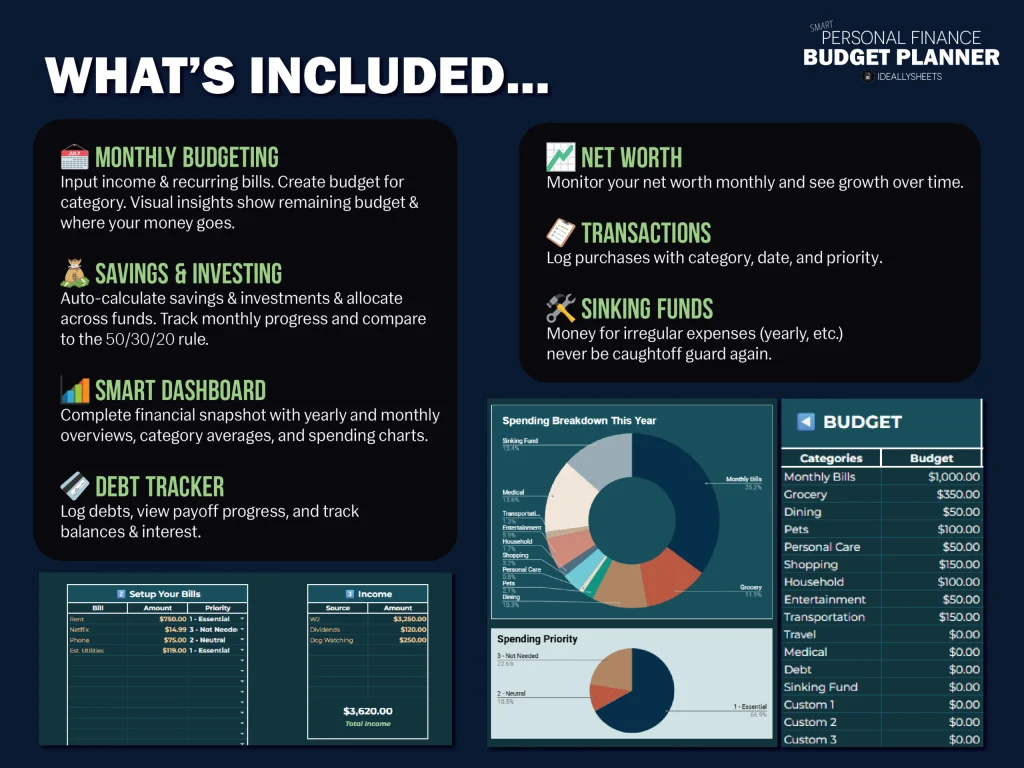
Automate the transfer. Set it up the same day you get paid, before the money has a chance to disappear into everyday spending. This single habit answers how much should you invest each month better than any spreadsheet ever will, because it removes willpower from the equation.
Don’t wait for “leftover” money. If you only invest what’s left after spending, there will rarely be anything left. Treat your monthly investment like a bill owed to your future self.
Small amounts still count. $25 or £25 a month is a real habit worth building. You can always raise it later, but you can’t recover the months you never started.
Review it twice a year. Life changes rent goes up, pay rises come in, priorities shift. Revisit how much should you invest each month every six months rather than setting it once and forgetting it.
A Quick Reality Check
If you’re comparing yourself to influencers online claiming they invest 50% of their income, take a breath. Most of them either have very few expenses, unusually high income, or they’re simply exaggerating. The goal isn’t to match a stranger’s number it’s to find a monthly amount that fits your actual life and that you can keep doing for years, not weeks.

The Bottom Line
There’s no universal magic number for how much should you invest each month but there is a universal principle behind it: start with a percentage you can genuinely sustain, automate it so you’re not relying on willpower, and increase it gradually as your income grows. Consistency will always beat perfection.
At Thepennyfy, we’ll keep breaking down these decisions in plain, practical terms because building wealth shouldn’t require a finance degree, just a simple, repeatable habit you can start today.
If you haven’t opened an account yet, our guide on How to Start Investing for Beginners is a good next step.
Common Questions Beginners Ask
Is it better to invest a fixed amount or a fixed percentage? A percentage tends to work better long-term because it grows with your income automatically. A fixed dollar or pound amount can feel comfortable at first, but it quietly loses value as your salary increases and your lifestyle expands alongside it.
What if I can only afford $10 or £10 a month right now? Start there anyway. The habit matters more than the amount in the early stages. Ten dollars a month invested consistently for years builds both a portfolio and, just as importantly, a routine you’ll keep long after your income improves.
Should I invest before paying off student loans or a mortgage? This depends heavily on the interest rate. Low-interest debt, such as many student loans or mortgages, can often be paid down slowly while you invest in parallel. High-interest debt, on the other hand, usually deserves priority before any serious investing begins.
Does market volatility mean I should pause my contributions? Generally, no. Pulling back during a downturn is one of the most common mistakes new investors make, because it locks in losses instead of riding out the recovery. Sticking to your monthly plan, even when headlines feel alarming, is usually the wiser move over a long time horizon.
Is there a “wrong” age to start? Not really. The earlier you begin, the more time compounding has to work in your favor, but starting later simply means adjusting your monthly contribution upward to make up the difference. What matters most is starting with a plan rather than waiting for the “ideal” moment that never quite arrives.
Building this habit doesn’t need to be complicated. Whether you’re reading this from London, New York, Manchester, or Chicago, the underlying math works the same way small, consistent contributions, automated and increased over time, tend to outperform sporadic, emotional decisions almost every time.