
Juggling due dates, statement balances, and interest rates is enough to make anyone’s head spin. So if you’re holding a credit card and wondering, “can I pay off a credit card with a debit card?”, you’re asking a smart, practical question, not a silly one.
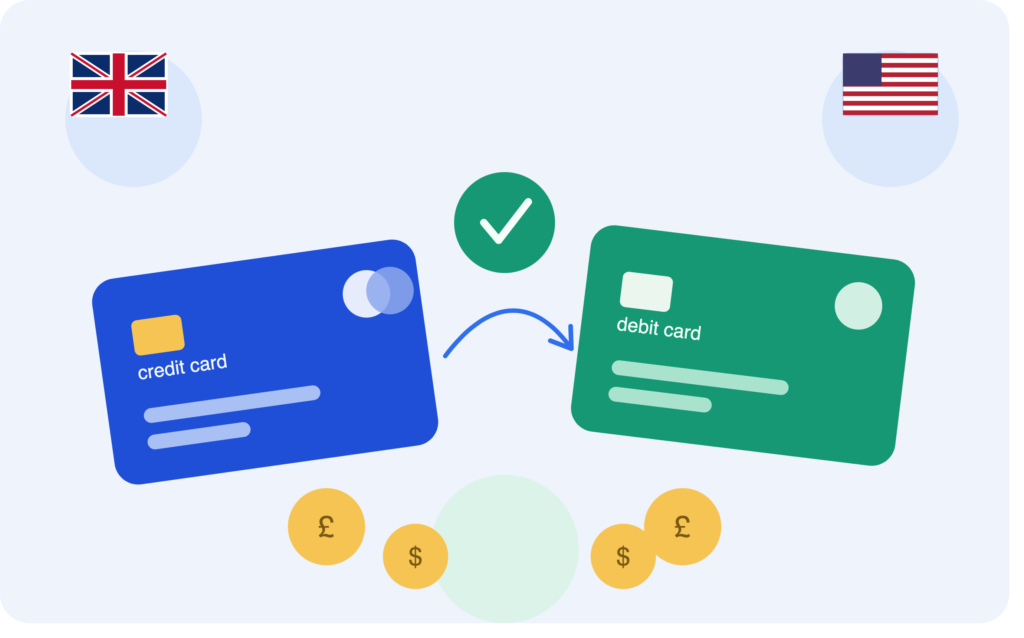
Here’s the good news: yes, you can pay off a credit card with a debit card in the UK, and the same holds true across most of the US as well. It’s actually one of the safer and quicker ways to keep your balance under control, as long as you know which route to use and what to watch out for along the way.
This guide walks through exactly how to pay off a credit card with a debit card on both sides of the Atlantic, what affects how fast your payment clears, how it compares to other repayment methods, the mistakes people commonly make, and a few practical strategies to help you clear your balance faster instead of just chipping away at it month after month
Quick Overview: Paying Off a Credit Card with a Debit Card
| Feature | What to Expect |
|---|---|
| Focus keyword | Can I pay off a credit card with a debit card UK |
| Who this applies to | UK cardholders, US cardholders, and dual-account holders |
| Typical payment channels | Debit card payment, bank transfer, Direct Debit / ACH, standing order |
| Not accepted | Paying with another credit card or store card |
| Processing speed | Same day to 24 hours through online banking |
| Cost | Usually free for standard domestic debit cards |
Why People Ask This Question in the First Place
It’s worth pausing on why this comes up so often. A lot of cardholders assume that because a credit card and a debit card both live in the same wallet, they must work interchangeably. They don’t, not entirely. A debit card draws from money you already have sitting in your bank account, while a credit card is a line of borrowed money you’re expected to repay. When you pay off a credit card with a debit card, you’re essentially moving your own funds across to cancel out what you borrowed, which is exactly why banks treat it as a normal transaction rather than anything unusual.
The confusion usually comes from mixing this up with paying one credit card using another, which is a completely different (and generally restricted) process, covered further down.

How to Pay Off a Credit Card with a Debit Card
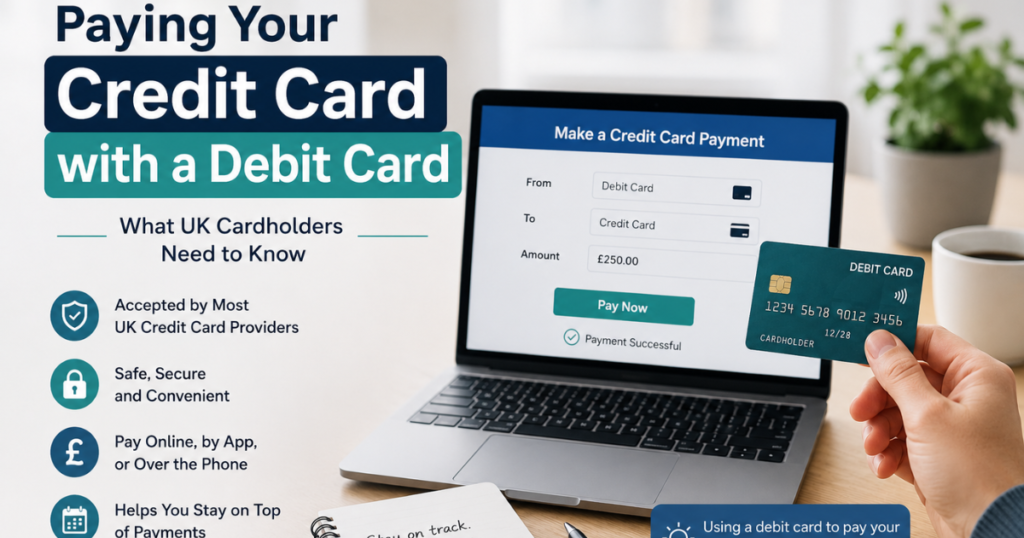
Most major banks on both sides of the Atlantic give you a handful of ways to pay off a credit card with a debit card, using funds straight from your account. None of the methods are complicated, but each suits a slightly different situation depending on how comfortable you are with digital banking.
1. Through your Banking App or Online Account
This is by far the most common way people pay off a credit card with a debit card today, and for good reason, it’s fast and you can do it from your phone in under a minute.
. Open your card provider’s app or log in on desktop.
. Head to the payments or “pay your bill” section.
. Choose to pay by debit card, or link your current/checking account.
. Enter your card details, including the expiry date and security code.
. Pick how much you want to pay: the minimum due, the full statement balance, or a custom amount.
. Confirm through your bank’s security verification step.

2. Over the Phone
Not everyone wants to bank digitally, and that’s fine, most providers still let you pay off a credit card with a debit card over the phone.
Call the number on the back of your card, follow the automated prompts for making a payment, and enter your debit card details when asked. Keep the confirmation reference the system gives you, just in case you need to prove the payment went through later.
3. In Person
If you’d rather deal with a real person, you can usually walk into a branch (or, in the UK, a Post Office that handles banking services) and settle your bill directly at the counter. It’s slower than doing it digitally, but some people simply prefer having a paper receipt in hand, especially for larger payments they want documented immediately.
How Long Does It Actually Take to Clear?
This is where people often get caught out. Once you pay off a credit card with a debit card, your bank takes the money from your account almost immediately, but your available credit limit on the card doesn’t always update at the same speed.
Debit card payment initiated → funds leave your account instantly → credit limit typically refreshes within a few hours to a full day.
| Payment Method | Speed of Transfer | Credit Limit Update | Typical Fee |
|---|---|---|---|
| Debit card (app/online) | Instant deduction | 2–24 hours | Free |
| Bank transfer / Faster Payments | Near-instant | Within a couple of hours | Free |
| Direct Debit / ACH | On scheduled date | Same day as execution | Free |
| Debit card (phone) | Instant deduction | Up to 24 hours | Free |
| Cheque or in-branch cash | 3–5 business days | On full clearance | Varies |
A good rule to live by: pay at least two to three working days before your due date. Weekends and bank holidays can slow down backend processing even when the transfer itself feels instant, and the last thing you want is a late payment mark for something that was genuinely just a timing issue.
Common Mistakes People Make
Even though the process itself is simple, a surprising number of people run into avoidable trouble. Here’s what to watch for:
. Leaving it until the last day.
Payments made right on the due date can sometimes miss the processing window, especially over a weekend, and end up posting a day late.
. Confusing a debit card payment with a cash advance.
These are not the same thing. A cash advance usually involves withdrawing cash or using a credit card at an ATM, which triggers fees and immediate interest. Paying off a credit card with a debit card, by contrast, is a standard, fee-free transaction.
. Not checking daily transfer limits.
If you’re trying to clear a large balance in one go, your bank’s daily debit card limit might block the full amount, forcing you to split the payment.
. Forgetting to update autopay after switching banks.
If you’ve recently changed your current or checking account, an old Direct Debit still pointing at a closed account is one of the most common causes of a missed payment.
. Ignoring the credit limit refresh delay.
Just because the money’s left your account doesn’t mean your available credit has updated. Trying to make a large purchase minutes after paying can still get declined.
Can You Pay a Credit Card With Another Credit Card?
Short answer, no. This one trips a lot of people up. While you can pay off a credit card with a debit card easily, card issuers in both the UK and the US don’t allow you to settle one credit card directly with another. Trying to work around it, for example by withdrawing cash from Card A to pay Card B, usually backfires.
Here’s why that route is a bad idea:
. Cash advance fees
typically run 3–5% of the amount withdrawn.
. Interest starts immediately,
with none of the usual grace period you get on regular purchases.
. Frequent cash withdrawals
can raise flags with lenders and affect how your credit behaviour is viewed over time.
If your real goal is escaping high interest rather than just shuffling debt around, a 0% balance transfer credit card is the far better option. You move your existing balance to a new card offering an introductory 0% APR period (often somewhere between 12 and 30 months), pay a one-off transfer fee, and then every payment you make actually chips away at the principal instead of mostly covering interest.
Why You Should Pay Off a Credit Card with a Debit Card
There are a few genuine advantages to choosing this route over other repayment methods:
. You’re not creating new debt.
You’re paying with money you already have, not borrowing to pay off borrowing.
. No cash advance charges.
A debit card payment is treated as a normal transaction, not a cash withdrawal, so you skip those extra fees entirely.
. You control the timing.
Got a bit of extra cash this month? Log in and pay it down immediately instead of waiting for your next statement.
. It protects your credit score.
Paying consistently and on time, whether that’s through your debit card or Direct Debit, keeps your credit utilisation low and your payment history clean with agencies like Experian, Equifax, and TransUnion.
. It’s easier to track.
Because the payment comes straight from your bank account, it shows up clearly in your banking app alongside your other spending, making budgeting simpler.
Keeping the Payment Secure
Since you’re sharing debit card details to pay off a credit card, it’s worth being a little careful about where and how you do it
. Only enter your debit card information on your card provider’s official app or website, never through a link sent by text or email.
. Look for the padlock icon and “https” in the browser address bar if you’re paying through a desktop site.
. Use your bank’s official verification step (often called 3D Secure or two-factor authentication) rather than skipping it, even if it feels like an extra step.
. Keep an eye on your bank statement after the payment to confirm the amount matches what you intended to pay.
A Simple Strategy for Clearing Your Balance Faster
Paying off a credit card isn’t just about the method, it’s also about having some kind of system. Here’s a practical approach that works whether you’re in London or Los Angeles:
1. Set up a minimum payment safety net.
A Direct Debit or auto-pay for at least the minimum due means you’ll never miss a payment, even on a busy month.
2. Top up manually when you can.
Whenever you’ve got spare funds, pay off a credit card with a debit card for the extra amount. Every bit you pay early reduces the amount interest gets calculated on.
3. Pick a payoff method if you’re juggling multiple cards.
The avalanche method (targeting your highest APR card first) saves the most money overall. The snowball method (paying off your smallest balance first) tends to keep people motivated because they see results faster.
4. Reassess if your APR is high.
If you’re paying above 20% APR and it’s going to take more than a few months to clear, a balance transfer card might genuinely save you more than sticking to debit card payments alone.
5. Review your budget monthly.
Even a small recurring adjustment, say redirecting £30 or $30 a month from discretionary spending toward your card, adds up meaningfully over a year.
Debit Card Payments vs Balance Transfers: Which Fits You?
| Your Situation | Better Option | Why |
|---|---|---|
| Small balance, gone in 1–3 months | Pay off a credit card with a debit card | No transfer fees, and you clear it fast with money you already have |
| Large balance, high APR, 6+ months to pay off | 0% balance transfer card | Freezes interest so your payments go straight to the principal |
| Income varies month to month | Direct Debit + occasional debit top-ups | Keeps you compliant while giving flexibility when funds allow |
| Limited credit options | Manual debit card avalanche | Focuses extra payments on your priciest card without needing new credit |
Frequently Asked Questions
Can I pay off a credit card with a debit card if I bank internationally?
Usually your card provider expects a domestic debit card linked to a local currency account. Some do accept international cards through their online portal, but expect a foreign exchange fee, often somewhere around 2.5–3%, plus whatever your own bank charges on top.
Will paying off a credit card with a debit card actually improve my credit score?
Not directly, no. What helps your score is paying on time and keeping yourbalance low relative to your limit. The method you use to pay, debit card, bank transfer, or otherwise, doesn’t matter to the credit bureaus. What matters is consistency.
Can someone else’s debit card be used to pay my credit card bill?
Generally not. Providers run anti-fraud checks, and in most cases the name on the debit card needs to match the credit cardholder’s name on file.
What happens if I accidentally pay more than I owe?
Your account simply goes into a credit balance. You can either leave it there and use it against future spending on the card, or call your provider and ask for the surplus to be refunded to your bank account.
Are there limits on how much I can pay off a credit card with a debit card in one go?
Card issuers rarely cap how much you can pay off, but your own bank might set a daily spending limit on your debit card, often somewhere between a couple thousand and ten thousand in your local currency. Worth checking before you attempt a large one-off payment.
Is it safe to pay off a credit card with a debit card online?
Yes, as long as you’re using your provider’s official app or website and going through the proper verification step. It’s no riskier than any other online debit card transaction.
Conclusion
So, can you pay off a credit card with a debit card? Absolutely, and it’s one of the simplest, fee-free ways to stay on top of your balance whether you’re banking in the UK or the US. Whether you use your banking app, a phone call, or an in-person visit, the process is quick and doesn’t cost you anything extra when done through the right channel.
The bigger win comes from pairing that payment method with a bit of strategy: automate your minimum payment so you never miss a due date, top up manually when you can, avoid the common mistakes outlined above, and reassess whether a balance transfer makes sense if your interest rate is working against you.
Wherever you’re banking, UK or US, the principle stays the same. Move money you already have, avoid anything that looks like a cash advance, and stay ahead of your due dates. Do that consistently and your balance, and your credit score, will thank you for it.