


For years, I didn’t have a financial plan. I had a banking app I opened with a little dread and a vague hope that things would somehow work themselves out.
They never did.
What actually changed things wasn’t a pay rise or some lucky break. It was one weekend spent finally working out how to create a financial plan for beginners that tied everything together.
Instead of firefighting one money problem at a time and calling it progress, I finally had a system.
If you’ve been handling money in pieces sorting the budget one month, ignoring the debt the next, and forgetting the savings account exists entirely this guide pulls everything into one place.
Anyone searching for how to create a financial plan for beginners is usually looking for exactly that. Not ten scattered money tips. One connected approach.
At ThePennyfy, we’ve created this guide for readers across the UK and the US, so the underlying principles work whether you’re counting in pounds or dollars.
Why a Financial Plan Beats Winging It
Managing money without a plan can feel a bit like bailing water out of a leaky boat.
You fix one problem, another one appears somewhere else.
A financial plan changes that.
Instead of scrambling every time a bill or unexpected expense arrives, you decide in advance where your money should go. Your budget supports your goals. Your savings protect your budget. Your debt strategy frees up future income. Your investments work toward longer-term goals.
That connection is what makes financial planning useful.
A financial plan doesn’t need to be complicated either. For most beginners, it can start with a clear picture of what you own, what you owe, what you earn, what you spend, and what you want your money to accomplish.

Step 1: Find Out Where You Actually Stand
Every serious attempt at how to create a financial plan for beginners should start here—not with a budgeting app or an investment account.
Start with an honest financial snapshot.
List What You Own
Write down your:
- Current and savings accounts
- Investments
- Retirement or pension accounts
- Property or other significant assets
- Other valuable assets
Then list what you owe:
- Credit card balances
- Personal loans
- Student loans
- Car finance
- Mortgage
- Other outstanding debts
Now subtract what you owe from what you own.
That’s your net worth.
The number might be positive, negative, or somewhere in between. That’s okay.
The purpose isn’t to judge yourself. It’s to establish a starting point.
Most beginners avoid this step because the number can feel uncomfortable. Do it anyway.
You can’t improve a financial situation you haven’t measured.
Step 2: Decide What You’re Working Toward
A financial plan without a destination is basically a spreadsheet full of numbers going nowhere.
This is where your personal financial planning goals start becoming useful.
Separate your goals into different time frames.
Short-Term Financial Goals
These might include:
- Building an emergency fund
- Paying off a credit card
- Saving for a holiday
- Covering an upcoming bill
- Saving for a car
Long-Term Financial Goals
These could include:
- Buying a home
- Building retirement savings
- Becoming debt-free
- Investing for long-term wealth
- Reaching financial independence
Be specific.
“Save more money” isn’t really a goal.
“Save £200 or $200 every month toward a house deposit” is.
Give each important goal a number and, where possible, a deadline.
You can also read our guide on how to set financial goals in your 20s for more ideas.
Step 3: Build a Budget You’ll Actually Keep
This is the part of how to create a financial plan for beginners that gets practical.
A beginner budgeting and saving plan doesn’t need twelve categories, complicated spreadsheets, or a colour-coding system.
It needs to be realistic enough that you’ll still use it three months from now.
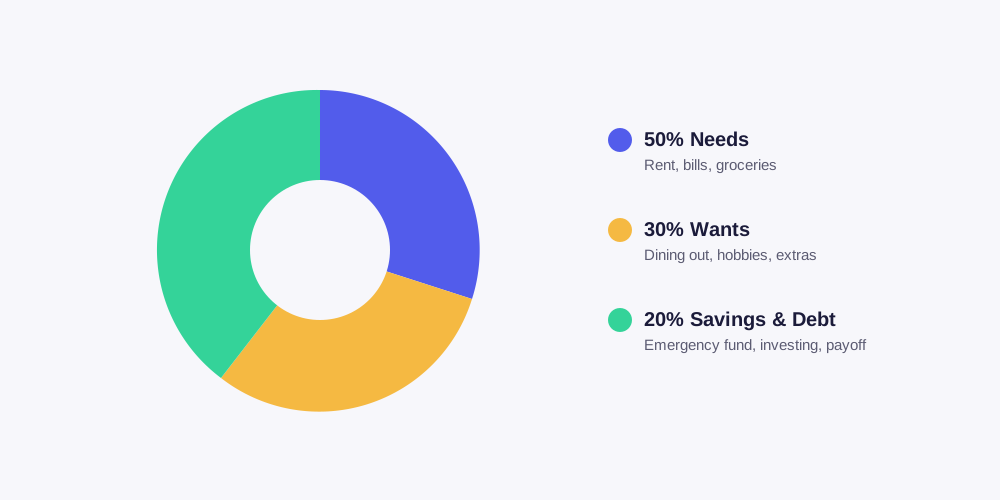
One common starting point is the 50/30/20 budgeting framework:
- 50% for needs
- 30% for wants
- 20% for savings and debt repayment
Treat that as a starting framework rather than a rule you have to follow perfectly.
Your rent, income, family situation, debt, and cost of living may make a different split more realistic.
The important thing is knowing where your money goes.
Start by tracking:
- Housing
- Utilities
- Groceries
- Transportation
- Insurance
- Debt payments
- Subscriptions
- Entertainment
- Savings
- Investments
Then compare your spending with your income.
If you’re consistently spending more than you earn, that’s the first problem your financial plan needs to solve.
If you’re regularly left with money at the end of the month, give that money a job instead of letting it disappear.
Step 4: Build an Emergency Fund
Skip this step and the rest of your financial plan can remain fragile.
An unexpected car repair, broken appliance, medical expense, or period without income can quickly push you back into debt if there’s nothing set aside.
Start small.
Even £500 or $500 can provide a useful first layer of protection.
Then gradually work toward a larger emergency fund based on your essential monthly expenses.
MoneyHelper recommends aiming for at least three months of essential household expenses where possible.
Your emergency fund should generally be kept somewhere accessible rather than invested in something that could fall in value when you suddenly need the money.
A separate savings account can also make it less tempting to spend the money on everyday purchases.
The important part is to start with an amount you can realistically maintain and build from there.
Step 5: Deal With Debt Using a Strategy

Debt can quietly undermine progress happening everywhere else in your financial plan.
High-interest credit card debt is particularly important to address because interest can make balances much more expensive over time.
There are two popular approaches to paying off multiple debts.
The Debt Snowball
With the snowball method, you focus on paying off your smallest balance first while continuing to make the required payments on your other debts.
Once the smallest balance disappears, you move that payment toward the next debt.
The psychological benefit is simple: you see wins quickly.
The Debt Avalanche
With the avalanche method, you focus on the debt with the highest interest rate first.
This approach prioritizes the mathematics of reducing interest costs.
MoneyHelper similarly recommends prioritising debts charging the highest rate of interest while continuing to make the required payments on other debts.
Neither method is magic.
The important thing is having a strategy instead of simply making random payments whenever you remember.
Step 6: Start Investing for the Long Term
Once your emergency savings are underway and your debt has a strategy, investing can become another part of your financial plan.
The key is to match investments with your goals and time horizon.
For UK readers, a Stocks and Shares ISA can be one tax-advantaged option for investing. For the 2026/27 tax year, the overall ISA allowance is £20,000.
For US readers, workplace retirement plans such as a 401(k) and accounts such as an IRA can form part of a long-term investment strategy. Investor.gov also highlights regular investing, diversification, and paying down high-interest debt as important parts of building wealth.
You don’t necessarily need a huge amount of money to begin.
What matters more is choosing an amount you can afford and contributing consistently over time.
For a beginner-friendly walkthrough, see our guide on how to start investing with little money.
Remember that investments can go down as well as up, and the right choice depends on your circumstances, goals, time horizon, and tolerance for risk.
Step 7: Protect What You’ve Built

This step gets skipped surprisingly often.
As your savings, investments, income, and assets grow, there’s more to protect.
Think about the risks that would cause the biggest financial problem for you.
Depending on your circumstances, that might include:
- Income protection
- Life insurance
- Health insurance
- Contents insurance
- Renters insurance
- Home insurance
- Other appropriate forms of protection
If someone depends on your income, life insurance may deserve particular attention.
If losing your ability to work would immediately create a financial crisis, income protection may also be worth considering.
You don’t need every possible insurance policy.
The goal is to understand which risks could seriously damage your financial plan and decide how much protection makes sense for you.
How to Create a Financial Plan That Works in Real Life
A financial plan isn’t useful if it’s impossible to follow.
The best plan is usually the one you can maintain consistently.
Try making your plan automatic wherever possible.
For example:
- Your salary arrives.
- Bills and essential expenses are covered.
- A set amount automatically moves to savings.
- Debt payments are made automatically.
- Investment contributions happen regularly.
- The remaining money is available for everyday spending.
Automation removes some of the decision-making from your month.
Investor.gov also highlights automatic contributions as a way to make regular saving and investing easier to maintain.
You don’t need to make every financial decision perfectly.
You need a system that keeps moving even when you’re busy.
Create a Simple Financial Plan in One Afternoon
If the idea of financial planning still feels overwhelming, make it smaller.
Take a notebook or spreadsheet and write down these seven things:
1. Income: How much money comes in each month?
2. Expenses: Where does it currently go?
3. Net worth: What do you own minus what you owe?
4. Goals: What are the three most important things you’re saving for?
5. Emergency fund: How much do you have set aside?
6. Debt: Which balance should you prioritise?
7. Investing: How much can you realistically contribute regularly?
That’s your starting financial plan.
It doesn’t need to look impressive.
It needs to tell your money where to go.
Review Your Financial Plan Every 6 Months
Nobody masters how to create a financial plan for beginners in a single afternoon, and that’s completely normal.
Your financial plan should change as your life changes.
Your income might increase.
Your rent might change.
You might move.
You could get married, have children, change jobs, buy a home, or take on new debt.
That’s why reviewing the plan matters.
Every six months, check:
- Your net worth
- Your monthly spending
- Your savings
- Your debt balances
- Your investment contributions
- Your financial goals
- Your insurance and protection needs
Then make adjustments.
You don’t need to rebuild the entire plan every time.
Sometimes a small change is enough.
Common Financial Planning Mistakes Beginners Make
Even a simple financial plan can go off track if you fall into a few common traps.
Trying to Do Everything at Once
You don’t need to build a huge emergency fund, clear every debt, maximise investments, and save for a house simultaneously.
Prioritise.
Creating an Unrealistic Budget
A budget that leaves no room for enjoyment usually doesn’t survive.
Build something you can actually live with.
Ignoring High-Interest Debt
Making investment contributions while expensive debt continues growing can make your overall financial progress harder.
Look at the interest rates and understand what you’re paying.
Investing Before Building Any Safety Net
Investments are designed for longer-term goals and can lose value.
Keep appropriate emergency savings accessible rather than relying on investments for every unexpected expense.
Never Reviewing the Plan
Your first financial plan is a starting point, not a permanent contract.
Review it and adjust it when your circumstances change.
FAQs About Creating a Financial Plan
What’s the difference between a budget and a financial plan?
A budget focuses mainly on your income and spending from month to month.
A financial plan is broader. It connects your budget with your financial goals, savings, debt repayment, investing, retirement planning, and financial protection.
Think of the budget as one part of the larger plan.
How do I start a financial plan with no savings?
Start exactly where you are.
First, calculate your income, expenses, debts, assets, and net worth.
Then create a realistic budget and begin building a small emergency fund.
You don’t need to have savings before you can create a financial plan. The plan is what helps you start building them.
Do I need a financial advisor to create a financial plan?
Not necessarily.
Many beginners can handle basic budgeting, net worth tracking, savings goals, debt repayment, and straightforward investing research themselves.
Professional advice can become more useful when your finances become complicated or when you need help with areas such as tax planning, retirement, estate planning, or complex investments.
How often should I update my financial plan?
Every six months is a reasonable starting point.
You should also review it sooner if something significant changes, such as a new job, major income change, move, marriage, divorce, child, home purchase, or substantial new debt.
What is the first step in financial planning?
The first step is understanding exactly where you stand.
Calculate your income, expenses, assets, debts, and net worth.
Once you know your starting point, you can decide what needs to happen next.

Where This Leaves You
A financial plan was never meant to be a document written once and forgotten.
It’s a system.
Seven connected pieces:
- Know where you stand.
- Set specific financial goals.
- Build a realistic budget.
- Create an emergency fund.
- Use a strategy to deal with debt.
- Invest for appropriate long-term goals.
- Protect what you’ve built.
None of it needs to be flawless on day one.
Whether you’re building your plan in Leeds or Los Angeles, the underlying structure is remarkably similar: understand your money, give it direction, protect yourself from setbacks, and keep adjusting as life changes.
That’s the approach we keep coming back to here at ThePennyfy.
Small, connected steps.
Checked regularly.
Given enough time to actually do their job.
Useful Resources
For UK readers, MoneyHelper provides free, impartial guidance on budgeting, savings, debt, pensions, and other personal finance topics.
For US readers, Investor.gov provides educational resources and tools covering investing, retirement accounts, diversification, financial goals, and investment risks.
Disclaimer: This article is for general informational purposes only and does not constitute financial, investment, tax, or legal advice. Financial products, tax rules, allowances, and eligibility requirements can vary by country and individual circumstances. Consider speaking with a qualified financial professional before making significant financial decisions.