


I used to think personal finance tips for beginners were for people who already had their life together. Turns out they’re for everyone else too, the ones staring at a bank app with a small knot in their stomach, hoping the number is bigger than they remember. That was me for a long time. What changed things wasn’t one big decision. It was a handful of small habits, stacked one on top of another, none of them dramatic on their own.
If you’re looking for personal finance tips for beginners that actually work in real life, not theory, this list is built for that. We put it together at Pennyfy for readers in both the UK and the US, so it holds up whether you’re counting pounds or dollars.
Table of Contents
- Why Small Habits Beat Big Resolutions
- Know Your Numbers First
- Budget Without the Spreadsheet Obsession
- Build a Small Safety Net
- Automate Everything You Can
- Deal With Debt Before It Grows
- Start Investing, Even a Little
- Keep an Eye on Your Credit
- Review Every Few Months
- Avoid Comparing Your Numbers to Everyone Else’s
- FAQs
- Where This Leaves You
Why Small Habits Beat Big Resolutions
Most personal finance tips for beginners fail because they ask for too much too fast. A total overhaul on January 1st rarely survives past February. Small, repeatable habits work better. They don’t rely on motivation, which runs out. They rely on routine, which doesn’t.
Know Your Numbers First
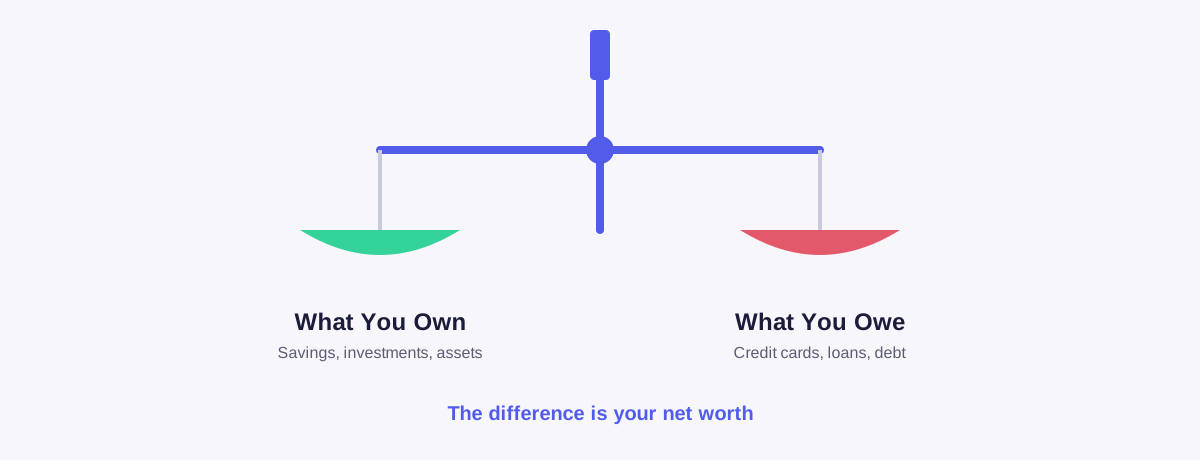
Before anything else, work out what you own and what you owe. Savings, investments, anything of value, minus credit cards, loans, whatever’s outstanding. That’s your net worth. Most people avoid this because the number feels uncomfortable. Do it anyway. You can’t improve what you’ve never actually looked at.
Budget Without the Spreadsheet Obsession
You don’t need twelve categories and colour codes. The 50/30/20 split works fine as a rough guide. Half toward needs, a third toward wants, the rest toward savings and debt. Among practical smart money tips, this one gets overcomplicated the most. Keep it simple and it actually survives past week one. Most people quit budgeting not because the plan was wrong, but because it demanded more effort than their actual life could sustain.
Build a Small Safety Net
An emergency fund is the piece that holds everything else together, and it’s one of the personal finance tips for beginners people skip most often because it feels boring compared to investing. Even £500 or $500 stops a bad week from becoming three months of credit card debt. Build toward 3 months of expenses over time. Keep it somewhere separate so it doesn’t quietly disappear on something else.
Automate Everything You Can
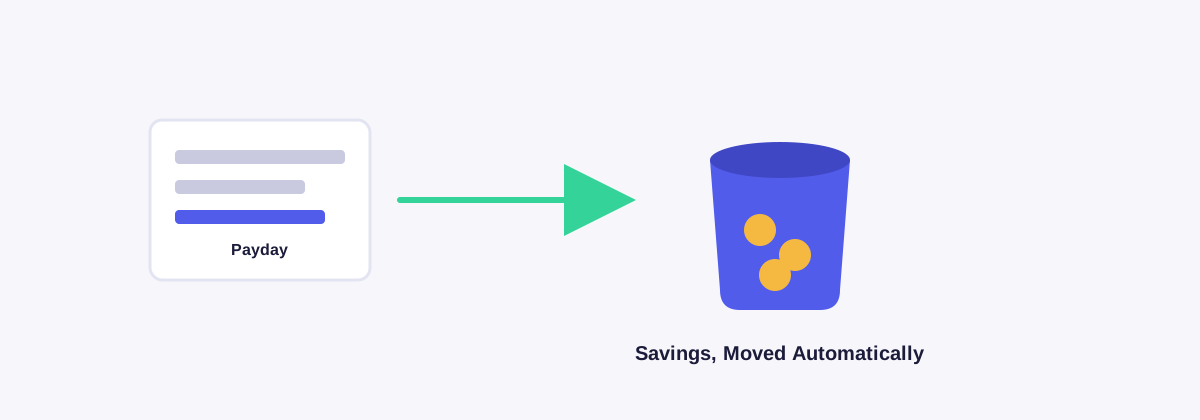
Willpower runs out. Automation doesn’t. Set up a transfer the day you get paid, savings first, then bills, then whatever’s left is genuinely yours to spend. This single habit does more for how to be money-smart than almost anything else on this list, because it removes the daily decision entirely.
Deal With Debt Before It Grows
High-interest debt, most credit cards in both the UK and US, quietly cancels out progress everywhere else. Pay the smallest balance first for momentum, or the highest interest first for the maths. Either beats no plan at all, which is what most people default to.
Start Investing, Even a Little
You don’t need a large sum to begin. A Stocks and Shares ISA in the UK or a Roth IRA in the US both let you start small and let compounding do the heavy lifting. We covered this properly in our guide on investing with little money. The amount matters less than starting.
Keep an Eye on Your Credit
Your credit history follows you quietly into renting a flat, financing a car, sometimes even job offers, on either side of the Atlantic. Check it once a year at minimum. Pay in full where you can. Don’t close old accounts the moment you stop using them.
Review Every Few Months
These personal finance tips for beginners only work if you actually revisit them. Set a reminder every 3 to 6 months. Check your budget, your savings, your debt progress against where you actually stand. Adjust what needs it. Leave the rest alone.
Avoid Comparing Your Numbers to Everyone Else’s
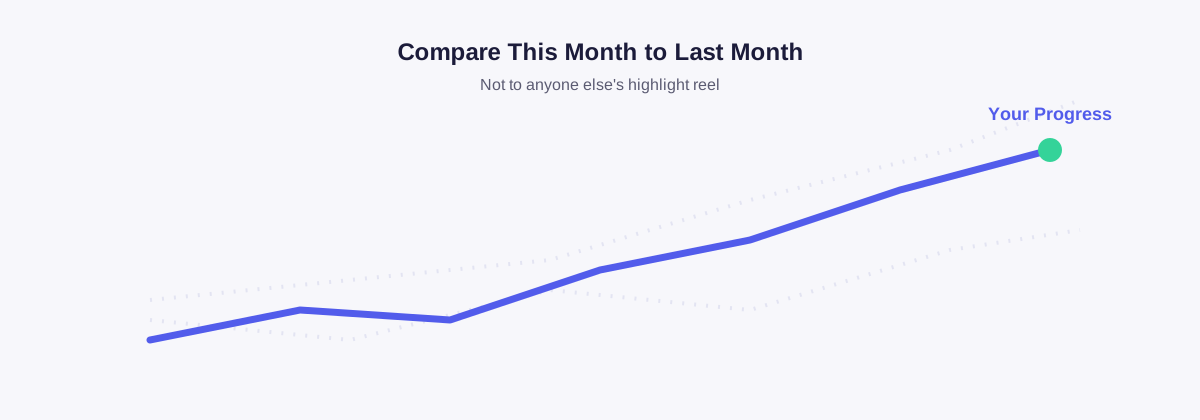
One habit that quietly undoes good personal finance tips for beginners is scrolling social media and measuring your progress against someone else’s highlight reel. Their numbers, their timeline, their starting point were never the same as yours. Focus on whether this month looks better than last month. That’s the only comparison that actually matters.
FAQs
What are the most important personal finance tips for beginners? Building an emergency fund, tracking where your money goes, automating savings, and paying down high-interest debt cover most of what actually matters early on.
How can I improve my smart money habits quickly? Automating your savings the day you get paid is usually the fastest change with the biggest impact, since it removes the daily willpower problem.
Do personal finance tips for beginners work the same in the UK and US? The core principles are identical. Emergency funds, budgeting, debt payoff, and investing all work the same way. The account names just differ, ISA versus Roth IRA, for example.
How much should I save each month? There’s no universal number. 20% of take-home income is a common starting point, adjusted to what your actual expenses allow.
Is it too late to start applying these tips? Never. Small habits compound regardless of when you start. The best time was earlier. The next best time is today.
Where This Leaves You
Personal finance tips for beginners don’t need to be complicated to work. A handful of small, repeated habits, an emergency fund, a simple budget, automated savings, some attention to debt and credit, do more over time than any single big decision ever could. Whether you’re building this in Liverpool or Los Angeles, the mechanics stay the same.
That’s the approach we keep coming back to here at Pennyfy. Small habits, checked on regularly, given time to actually work.
This article is for general informational purposes only and does not constitute financial advice. Everyone’s financial situation is different, so consider speaking with a qualified financial advisor before making significant financial decisions.